

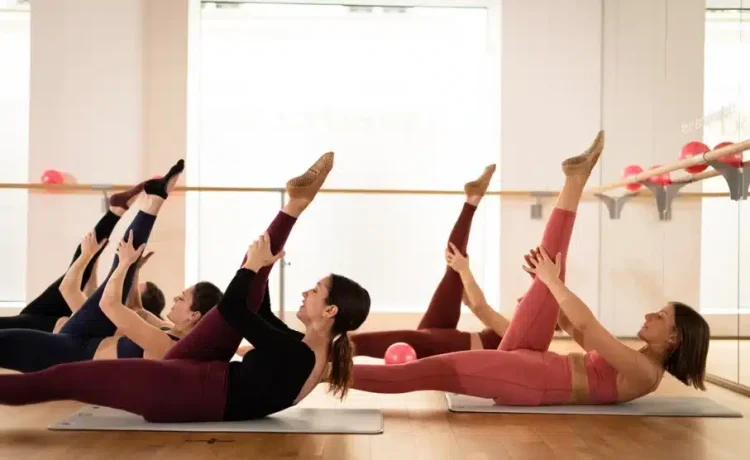
Home training and studio attendance are often treated as alternative choices. Members participating in workout classes can use short home sessions to address movement, strength or scheduling needs without duplicating the fatigue created by group training.
The home session should have a defined supporting role. It does not need to reproduce the class atmosphere, equipment or intensity.
Begin With the Studio Schedule
The member should map the weekly classes before adding home work. Their movement patterns, impact and intensity determine what is missing.
A timetable containing cycling and HIIT may already provide substantial leg and cardiovascular demand. Adding a high-repetition home squat circuit could create more overlap than benefit.
Home training is most useful when it fills a gap or preserves continuity on a disrupted day.
Give Home Sessions One Clear Purpose
A short session might develop upper-body pulling, practise controlled mobility or maintain general movement during a busy week.
Trying to train every quality in 20 minutes often produces a rushed circuit. A narrower purpose allows better exercise selection and progression.
The purpose can change across training phases, but it should be clear within each phase.
Avoid Repeating Class Fatigue
If classes include many lunges, jumps and burpees, home sessions should not automatically contain the same movements. Different exercises can support the body without adding identical stress.
Rows, controlled hinges, trunk exercises or mobility work may complement the studio schedule. The selection depends on available equipment and the participant’s goals.
Variety should change the demand, not merely the location.
Use Home Training for Skill Practice
A quiet environment allows participants to practise movements at a slower speed. They can work on squat control, hip hinging or plank position without keeping pace with a class.
The load and fatigue should remain moderate. The objective is to improve familiarity, not create soreness before the next studio visit.
Practice works best when the movement is simple enough to perform independently.
Keep the Session Short by Design
A short session should not be a long workout abandoned halfway. It needs a complete structure that fits the available time.
Three or four exercises may be sufficient. Clear sets, repetitions and rest periods prevent the session from expanding.
This makes home training easier to complete before work, during a lunch break or when travel prevents a gym visit.
Use Low-Noise Options for HDB Living
Jumping, dropping equipment and fast footwork may disturb neighbours. Quiet movements can still provide meaningful effort.
Split squats, elevated push-ups, controlled rows, glute bridges and isometric holds can be performed with limited impact. Tempo and pauses can increase difficulty when resistance is light.
The exercise area should remain compact and free from unstable furniture.
Home Sessions Can Support Recovery
Not every home workout needs to create a strong training stimulus. Light movement may help participants feel less stiff between demanding classes.
A recovery-focused session should remain easy enough that the member feels better afterwards. Turning mobility work into a high-intensity flow can defeat this purpose.
Recovery sessions should not be judged by sweat or calorie estimates.
Build a Minimum Backup Version
Work or family demands may prevent both the planned class and a full home workout. A 10- to 15-minute minimum session can preserve the habit.
It might include one lower-body movement, one upper-body movement and one trunk exercise. The member already knows what to do, so no additional planning is required.
This reduces the all-or-nothing response to a disrupted timetable.
Track Home Work With Class Attendance
Home sessions still contribute fatigue. They should be recorded alongside classes rather than treated as invisible activity.
A simple note of exercises, sets and effort can explain why a later class felt unusually difficult. It also shows whether the home plan is progressing.
The weekly programme should represent everything the member actually performs.
Do Not Use Home Work to Punish Missed Classes
Missing a booking does not require an exhausting replacement. The home alternative should match the role of the original session where practical.
If equipment limitations prevent a close match, the member can complete a useful supporting session and return to the normal timetable later.
Training is not a debt that must be repaid through extra fatigue.
Use the Studio for Its Advantages
Studio sessions provide instructors, group momentum, specialised equipment and an environment separated from household distractions.
At True Fitness Singapore, members can use group formats as the main weekly anchors while home sessions provide targeted support and flexibility.
Each environment should perform the tasks it handles well.
Build One Connected Programme
Home and studio training work best when they are planned together. The class schedule establishes the major weekly demands, and home sessions address specific gaps without competing for recovery.
A successful home session may feel less dramatic than a class. Its value lies in improving readiness, maintaining consistency or developing a quality the studio schedule does not cover.
When both environments share one purpose, flexibility no longer creates random training.


